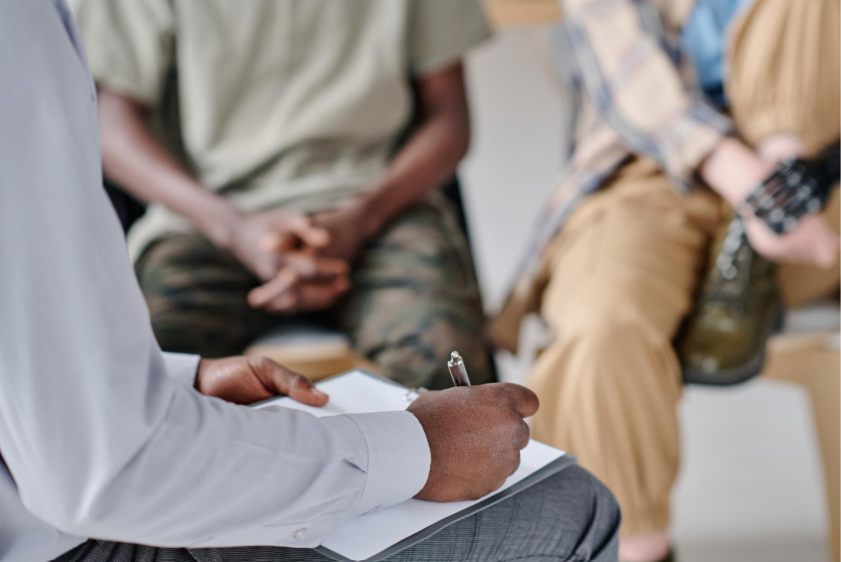
Rehab ends with a written plan and the next appointment already booked. Nobody finishes inpatient treatment here and walks out holding nothing but a discharge date. Planning for that day begins during the first week of a patient’s stay at a trusted drug and alcohol rehab in Carmel Hamlet, NY, which is why leaving feels like a handoff rather than a stop.
Arms Acres has run this program since March 1982, and its three outpatient clinics in the Bronx, Queens and Carmel exist so the handoff lands somewhere real. Ask any facility what happens on day thirty-one, and listen for whether they can name the appointment.
What does the final week of inpatient treatment involve?
The last week shifts from treatment to preparation. Group sessions turn toward practical questions about housing, work, transportation, and who the patient will see in the first forty-eight hours at home. Individual sessions with a social worker move from processing the past to rehearsing the specific situations waiting outside, because a patient who has already talked through the first family dinner handles it better than one who has not.
Medical staff reviews anything that continues after discharge. That includes psychiatric prescriptions, medication-assisted treatment, and any physical condition being monitored during the stay. Our clinical team writes down what the patient is taking, who prescribes it next, and when that prescription runs out. Patients also receive naloxone education before leaving, since overdose risk rises sharply after a period of abstinence lowers a person's tolerance.
How soon does outpatient treatment start after discharge?
Outpatient care is scheduled before the patient leaves the campus, and the first appointment usually falls within the first week. The gap between residential care and the next level of support is where people lose momentum, so we treat it as a scheduling problem rather than a motivational one. A patient going home to the Bronx leaves with a Bronx appointment, not a phone number to call when they feel ready.
Outpatient treatment means structured clinic sessions while the patient lives at home or in a sober living arrangement. Each visit blends individual counseling, group work, and ongoing medication management where it applies. How often someone attends depends on clinical need and tapers as stability builds. The clinics also offer couples counseling and employment support, since the pressures that pull people back toward use tend to be financial and relational rather than purely clinical. Walk-in assessments are available, and telehealth sessions are an option for patients whose schedules or transportation make in-person attendance difficult.
What goes into a discharge plan?
A discharge plan is a written document, not a conversation. It names the level of care that comes next, the clinic assigned to the patient, the prescriptions that continue, and the people responsible for each piece. Patients leave with a copy. Families involved in the family program usually see it too, since a plan nobody at home knows about tends to quietly stop existing by the second week.
What our discharge plans cover:
- The next level of care and the clinic location, with the first appointment date already set
- Any medication-assisted treatment continuing after discharge and who prescribes it
- Psychiatric follow-up for patients treated for co-occurring conditions
- Recovery coaching arrangements and how often contact happens
- Housing and employment considerations, including sober living referrals where appropriate
- The specific high-risk situations identified during treatment and the response rehearsed for each
That last line matters more than the others. A plan that lists appointments but never names the Friday night, the particular relative, or the drive past the old neighborhood has skipped the part that predicts relapse.
Talk to our intake team before discharge day arrives
Families often call us in the final week of a loved one’s stay asking what comes next. That call is welcome, and it is easier to answer while the patient is still on campus. Wondering what comes next for someone in treatment?
Call 888-227-4641, and our intake team will explain how outpatient scheduling and the family program work, and what support continues once formal treatment ends. The line is open 24 hours a day.
Why are the first ninety days after rehab the highest risk period?
Tolerance drops during abstinence, but the cues that triggered use stay exactly where they were. A person returns to the same apartment, the same commute and often the same social circle, without the daily structure that filled every hour of inpatient care. That mix of an unchanged environment and suddenly unstructured time is what makes the early months difficult, and it is why aftercare after treatment is a clinical necessity rather than an optional extra.
Cravings during this period are not evidence that treatment failed. They are a predictable response to familiar cues, and they fade in intensity with distance and practice. Patients who name a craving to a counselor or a coach within the same day generally move through it. Patients who sit with it alone for a week are the ones who tend to call us back from a worse position. Some patients also spend part of this stretch in sober living, which puts structure and other people in the same place.
What support exists after formal treatment ends?
Recovery coaching continues past discharge for patients who want it. Coaches are peers with lived experience of addiction and recovery, and their role sits alongside the clinical team rather than inside it. They handle the ordinary logistics of early sobriety, the questions a person may not want to raise in a therapy session.

The Alkathon alumni program runs monthly at the Carmel campus. Alumni return to speak with people currently in treatment, which serves both groups. Patients in their second week hear from someone three years out, and the person three years out gets a reminder of where they started. There is no cutoff on attendance. People come back years later, and some of them return every month.
What can families do when someone comes home?
Families frequently ask what they should watch for, which is the wrong question to lead with. Surveillance strains the relationship and rarely catches anything the person was not already struggling to hide. A more useful starting point is agreeing in advance on what happens if things slip, since a plan made calmly in week one is easier to follow than a decision made in panic during week nine.
Practical support carries further than vigilance. Keeping alcohol out of the house, protecting the appointment times, and taking the long view on employment all reduce pressure. Families who joined the family program during inpatient treatment already have this framing. Those who did not can still ask our outpatient staff for guidance, and relatives are welcome to attend sessions when the patient consents.
Frequently Asked Questions
What happens after detox at Arms Acres?
After completing detox, patients are evaluated by the clinical team to determine the appropriate next level of care. Many transition into the Arms Acres adult rehabilitation program, the residential phase of treatment. From there, patients can step down to one of three outpatient clinic locations in the Bronx, Queens or Carmel.
Can I go directly to outpatient treatment without doing inpatient first?
Yes, if the clinical assessment indicates that outpatient is the appropriate level of care for your situation. Outpatient is not a lesser option. It is the right option for patients who do not require 24-hour residential support.
What happens if I relapse after completing treatment?
A relapse is not the end of recovery. Contact us to discuss re-entering treatment at the appropriate level. The outpatient clinics and recovery coaching services are also available for patients who need support after a relapse without returning to full inpatient care.
What is the Alkathon program?
Alkathon is the Arms Acres alumni program. It takes place monthly at the Carmel facility, where recovering alumni return to share their experience with current patients. It is a form of ongoing, peer-based recovery support for people who have completed treatment at Arms Acres.
Is treatment at Arms Acres confidential?
Yes. All patient information is kept confidential under HIPAA and 42 CFR Part 2, the federal law governing confidentiality of substance use disorder records. Our full patient confidentiality policy is published on our website.
Contact Us
If you or someone you love is looking for dependable, professional addiction treatment, we are here to help. You can reach us by phone, whichever number suits you best, and our team will be glad to hear from you.
Intake Line: 888-227-4641 (open 24 hours a day, 7 days a week)
Outpatient Clinics:
- Bronx: 718-653-1537
- Queens: 718-520-1513
- Carmel: 845-704-6133
Related Topics:
- What Are the Benefits of Medication-Assisted Therapy (MAT) in Carmel Hamlet, NY Rehab Centers?
- How Cognitive Behavioral Therapy (CBT) Helps Treat Substance Use Disorders in Carmel Hamlet, NY