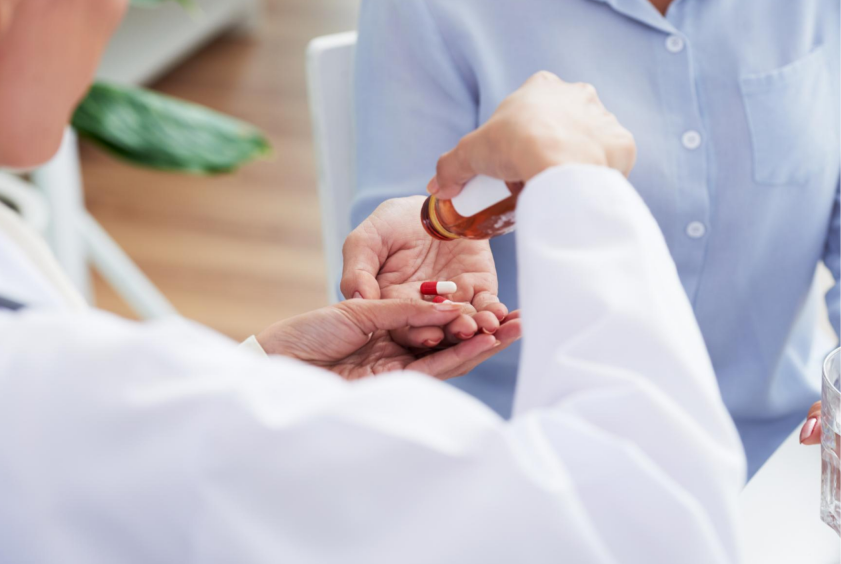
Medication-Assisted Therapy lowers cravings and blunts withdrawal enough that a patient can concentrate on counseling instead of on how badly they feel. That is the whole benefit stated plainly, and it explains the rest. MAT is provided as part of an individualized treatment plan, across both inpatient and outpatient settings, at a respected rehab center in Carmel Hamlet, NY.
Arms Acres holds a SAMHSA-certified Opioid Treatment Program designation alongside Joint Commission accreditation, and prescribing decisions rest with physicians and psychiatrists on staff rather than with an intake script. If a facility offers MAT, ask who writes the prescription and how often that person sees the patient.
What is medication-assisted therapy?
Medication-Assisted Therapy combines FDA-approved medications with counseling and behavioral therapy to treat substance use disorder. It is used most often for opioid use disorder, though several of the medications treat alcohol use disorder. The medication addresses the physical side, the counseling addresses everything else, and neither half works as well alone.

The approach is frequently misunderstood as swapping one substance for another, but the distinction is clinical rather than semantic. These medications are dosed by a physician, taken on a schedule, and aimed at stabilizing brain chemistry disrupted by prolonged use.
A patient on a stable MAT regimen goes to work, drives, holds conversations, and sits through therapy sessions, which is the opposite of what active use produces. The alcohol side of this is covered in more detail through medications that help people stop drinking, prescribed under medical supervision.
What are the main benefits during detox and rehabilitation?
Withdrawal is where most attempts at quitting end. Opioid withdrawal produces muscle pain, vomiting, insomnia, and cravings intense enough that people use again simply to stop the symptoms. Medication reduces that severity and makes the first week survivable, which is the difference between completing detox and leaving on day three.
The benefits continue past the acute phase, and this is the part people often miss. Cravings do not end when withdrawal does, and the months after residential treatment carry the highest relapse risk. Medication that keeps craving intensity manageable during that stretch buys the patient time to build everything else.
What MAT changes for patients in treatment:
- Withdrawal symptoms become manageable enough to complete medically supervised detox
- Cravings drop to a level where counseling can hold the patient's attention
- Overdose risk falls, particularly during the vulnerable weeks after tolerance has dropped
- Patients stay in treatment longer, and length of engagement tracks closely with outcomes
- Daily functioning returns, which makes employment and family repair realistic sooner
Which medications do you use and what does each one do?
Our clinical team prescribes from a confirmed set, matched to the substance involved and the patient's medical history. Some patients start medication during detox and continue it for months. Others use it only through the acute phase. Both are legitimate, and the decision rests on clinical judgment rather than a fixed policy.
Patients on Suboxone often ask about the difference between formats, and the comparison of Suboxone strips compared with pills comes up regularly in those conversations. Dosing, supervision requirements and cost all shift between one option and another, so the choice is made with a physician rather than picked from a menu.
Ask whether MAT fits your situation before admission
Not sure whether MAT fits your situation? Call 888-227-4641, and our intake team will explain how the clinical assessment determines whether MAT is appropriate and what the first days of treatment look like for someone starting medication. That conversation costs nothing and does not commit anyone to admission. The line is open 24 hours a day.
Who is a candidate for MAT?
Candidacy is decided during the clinical intake assessment, when a physician reviews medical history, substance use history, prior treatment attempts, current medications, and any co-occurring psychiatric conditions. Opioid use disorder is the most common indication. Alcohol use disorder is the second. A patient with several failed attempts at abstinence-based treatment is often a strong candidate, since repeating the same approach rarely changes the result.
Not everyone needs it. Patients whose dependence is mild, or whose primary substance has no approved pharmacological treatment, may do better with therapy alone. A medication-assisted therapy program is offered as one option inside a broader plan, not as a default setting. Patients who decline medication still receive the full rehabilitation program.
Does MAT replace therapy?
No, and a program that treats it as a substitute is not running MAT as intended. The medication reduces physical pressure. It does nothing about the reasons a person started using, the relationships damaged along the way, or the empty evenings waiting after discharge. Those need counseling.
Patients on MAT in our program attend the same Cognitive Behavioral Therapy sessions, group work, and specialty programming as everyone else. Medication makes those sessions more useful, since a patient in acute craving retains very little of what is said to them. The combination is what the evidence supports, and it is why the federal certification covering opioid treatment programs sets standards for both components rather than the prescription alone.
What happens to MAT after inpatient treatment ends?
Continuation is arranged before discharge. The plan names the prescribing physician, the clinic, and the appointment date, because a gap in medication during the first weeks at home is one of the more preventable causes of relapse. Patients stepping down to our Bronx, Queens, or Carmel outpatient clinics continue treatment with the same organization rather than starting over with an unfamiliar provider.
Duration varies widely and is a clinical decision rather than a fixed term. Some patients taper off within months. Others remain on medication for years, and there is no clinical requirement to stop while it is working. Tapering, when it happens, is gradual and supervised, and it happens when the rest of a person's recovery is stable enough to carry the weight.
Frequently Asked Questions
What is Medication-Assisted Treatment (MAT) and is it available at Arms Acres?
MAT combines FDA-approved medications with counseling and behavioral therapy to treat substance use disorder, most commonly opioid use disorder. Arms Acres provides MAT when clinically appropriate as part of an individualized treatment plan. It is available across inpatient and outpatient settings.
Will I be given medication during detox?
Potentially, yes. Medication may be used to manage withdrawal symptoms, prevent complications, and reduce discomfort. For opioid withdrawal, Medication-Assisted Treatment medications may be used. The clinical team makes medication decisions based on each patient's needs.
Is detox covered by Medicaid?
Inpatient detox at an OASAS-licensed facility like Arms Acres is typically covered by Medicaid in New York State. Call our intake line to verify your specific coverage before admission.
Is Arms Acres accredited?
Yes. Arms Acres is accredited by the Joint Commission and licensed by the New York State Office of Alcoholism and Substance Abuse Services (OASAS). Both credentials apply across its inpatient and outpatient services.
What happens after detox at Arms Acres?
After completing detox, patients are evaluated by the clinical team to determine the appropriate next level of care. Many transition into the adult rehabilitation program, the residential phase of treatment. From there, patients can step down to one of three outpatient clinic locations.
Contact Us
If you have questions about medication-assisted treatment (MAT) or want to verify your insurance before admission, we are here to help. You can reach us by phone, whichever number suits you best, and our team will be glad to hear from you.
Intake Line: 888-227-4641 (open 24 hours a day, 7 days a week)
Outpatient MAT Clinics:
- Bronx: 718-653-1537
- Queens: 718-520-1513
- Carmel: 845-704-6133
Related Topics:
- How Cognitive Behavioral Therapy (CBT) Helps Treat Substance Use Disorders in Carmel Hamlet, NY
- How Ongoing Recovery Check-Ins Help Maintain Sobriety After Rehab in Carmel Hamlet, NY