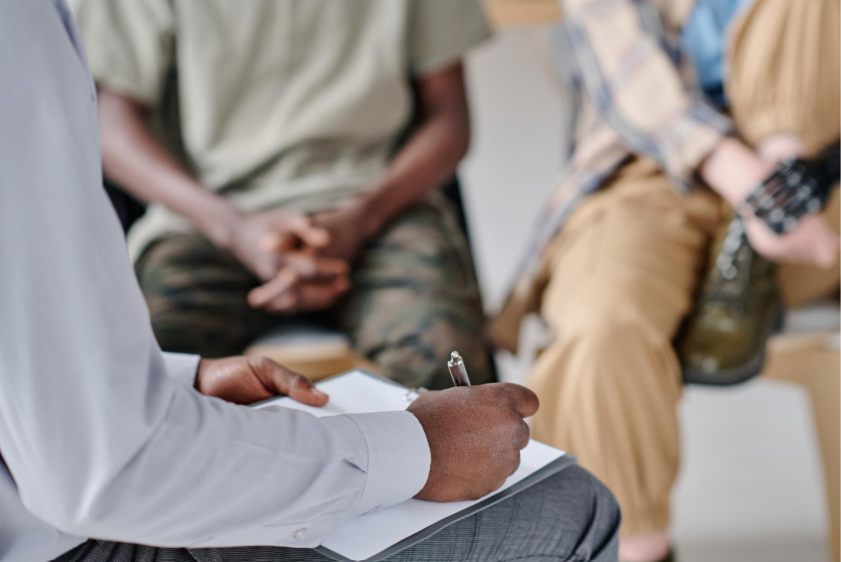
Group therapy is the part of addiction treatment that people most often approach with reluctance and leave talking about differently. The idea of sitting in a room and discussing personal struggles with people you do not know is uncomfortable for most. That discomfort does not disappear immediately when you walk in.
What tends to happen, though, is that the people in the room stop feeling like strangers fairly quickly. The shared context of recovery creates a kind of mutual understanding that most people in treatment have not encountered anywhere else in their lives. It is, maybe, one of the more surprising parts of the process for a lot of patients.
As a trusted community rehab center serving Carmel Hamlet and the surrounding areas, Arms Acres builds group therapy into treatment because connection is part of how people actually get better. Here is what group therapy looks like in our clinical program, how it functions, and why it plays the role it does in addiction recovery.
What Group Therapy Is in an Addiction Treatment Context
Group therapy is a structured clinical session facilitated by a licensed therapist or counselor, in which a small group of patients works through recovery-related material together. It is not the same as a 12-step meeting, though both have value in our inpatient program.
Key characteristics of group therapy:
- It is clinically led by a trained clinician who sets the therapeutic framework, guides what happens in the room, and ensures the session serves each participant's clinical goals.
- Sessions are built around specific therapeutic methods, including Cognitive Behavioral Therapy (CBT) and Motivational Interviewing (MI), among other clinical approaches.
- A session might work through a CBT exercise on identifying and challenging thought patterns that drive substance use.
- MI techniques may be used to help participants articulate their own reasons for change.
- The specific method varies, but the clinical structure is consistent and purposeful.
Why the group format matters:
The presence of other people in recovery is what makes group therapy distinct from one-on-one clinical sessions, and that element is where much of its clinical value comes from.

Why the Shared Room Changes Something
Addiction tends to operate in isolation. Not always physical isolation. A lot of people dealing with substance use disorder still have families, jobs, and full social lives. But there is a kind of internal isolation that kind of creeps in quietly. The sense that what you are carrying is too heavy, maybe too shameful, to bring into any real conversation without editing it first.
Sitting in a room with people who get it from the inside interrupts something. The role of peer support in moments like these is hard to overstate. When you say something honest about what addiction has taken from you, and the people around you respond with recognition instead of shock, that is not a small thing. Clinical research on group therapy has consistently found that the peer dynamic brings shame down and that lower shame connects directly to better treatment engagement.
Group therapy also builds accountability in a way that actually feels mutual. When the people around you have been honest about where they are, it gets harder to minimize your own situation. The group's honesty pulls everyone toward more honest self-examination. That is something a one-on-one session with a clinician, as valuable as that is, just cannot replicate on its own.
The Different Types of Group Sessions in Our Program
Not all group sessions serve the same purpose, and the mix in our inpatient program is deliberate.
Psychoeducation Groups
These sessions are built around learning and cover:
- What substance use disorder is at a neurological and behavioral level
- How specific therapeutic tools like CBT work
- What the evidence says about recovery
- Related content that gives patients a framework for understanding their own treatment
Knowledge about the process tends to increase engagement with it.
Process Groups
These sessions are more interpersonal and give participants space to:
- Work through what is currently happening for them emotionally and relationally
- Explore connections between past experience and current patterns
- Receive clinical perspective from the facilitating therapist
These tend to be where the more personal, harder work happens, becoming visible in the presence of others.
Skills Groups
These sessions focus on specific, practical coping strategies, teaching and practicing techniques for:
- Managing cravings
- Navigating high-risk situations
- Regulating difficult emotions
They are less about insight and more about building the toolkit that patients carry with them after discharge.
All three types of groups are part of the inpatient treatment schedule at our Carmel Hamlet, NY facility, alongside individual therapy and specialty programming.
How Group Therapy Connects to Individual Clinical Work
Group therapy and individual therapy are not interchangeable. They work together, serving different clinical functions.
Individual sessions provide space for clinical work that is too personal or specific for a group setting. Whatever a patient is working through in individual CBT sessions, their psychiatric evaluation, or their trauma-informed care work stays in the individual session. It does not go into the group room.
What moves between them is understanding. A pattern that surfaces in a group interaction might become the subject of the following individual session. Something a patient works through privately may become something they can speak about in group in a way that supports others in the room. The clinical work compounds in both directions.
For patients with co-occurring mental health conditions alongside addiction, our psychiatric services for co-occurring disorders run alongside the group and individual therapy components of the rehabilitation program. The psychiatric team and the therapy team are in communication, so the work happening in group sessions is supported by the full clinical picture.
What to Expect If You Have Never Done Group Therapy Before
Disclosure happens gradually. Most people start by listening more than speaking, and that is expected. Nobody is required to share anything before they are ready. The group facilitator sets the norms at the outset. Confidentiality, mutual respect, and a clinical framework that keeps sessions purposeful.
Confidentiality is the foundational agreement. What is shared in the group room stays in the group room. Every participant is in the same position. They are also sharing something of their own experience and need the same protection. That shared vulnerability tends to build trust faster than most people anticipate.
What many people report by the end of inpatient treatment is that the group experience was one of the parts of care that stayed with them. The insights from individual therapy are meaningful. But something about being in a room where other people understood from the inside, where the shared context was recovery rather than observation, tends to leave a different kind of mark.
Related Topics: