
Recovery from addiction and trauma isn't a single-track process, not even close. For many people, especially those whose substance use is tied to unresolved emotional injury, healing takes experiences that reach the brain and nervous system in ways talk-based therapy alone sometimes just can't. Equine therapy is one of those experiences.
As the best rehab facility in Carmel Hamlet, NY, Arms Acres has built it into its inpatient programming because of the specific work it makes possible. Horse-assisted therapy is a structured, research-supported approach used by treatment centers across the country, and it's recognized specifically for how well it works with patients carrying trauma histories.
Understanding what it actually is and how it functions in a recovery setting helps patients and families come in with realistic expectations and a real appreciation for the clinical thinking behind it. It earns its place in our program on clinical grounds, not aesthetic ones.
What Equine Therapy Is and What It Is Not
Equine therapy in a rehab context doesn't involve riding lessons or learning traditional horsemanship. Patients don't need any prior experience with horses at all, and the sessions aren't about skill acquisition in the conventional sense.
They're about guided interaction, and the therapeutic observations and responses that come out of that interaction matter more than the role of equine therapy might suggest at first glance.
The model most commonly used in addiction treatment centers on ground-level activities: leading, grooming, observing, and working in proximity to horses under the guidance of a trained facilitator and a licensed therapist.
What happens in that space, emotionally and behaviorally, becomes the material for therapeutic work. Horses are unusually attuned to the emotional states of the people around them, responding in real time to tension, anxiety, calm, and confidence in ways that give the patient honest, non-judgmental feedback, kind of instantly.
That feedback is hard to replicate in an office setting, and it can break through denial or emotional numbing faster than weeks of verbal sessions sometimes manage.
The Connection Between Horses and Emotional Regulation
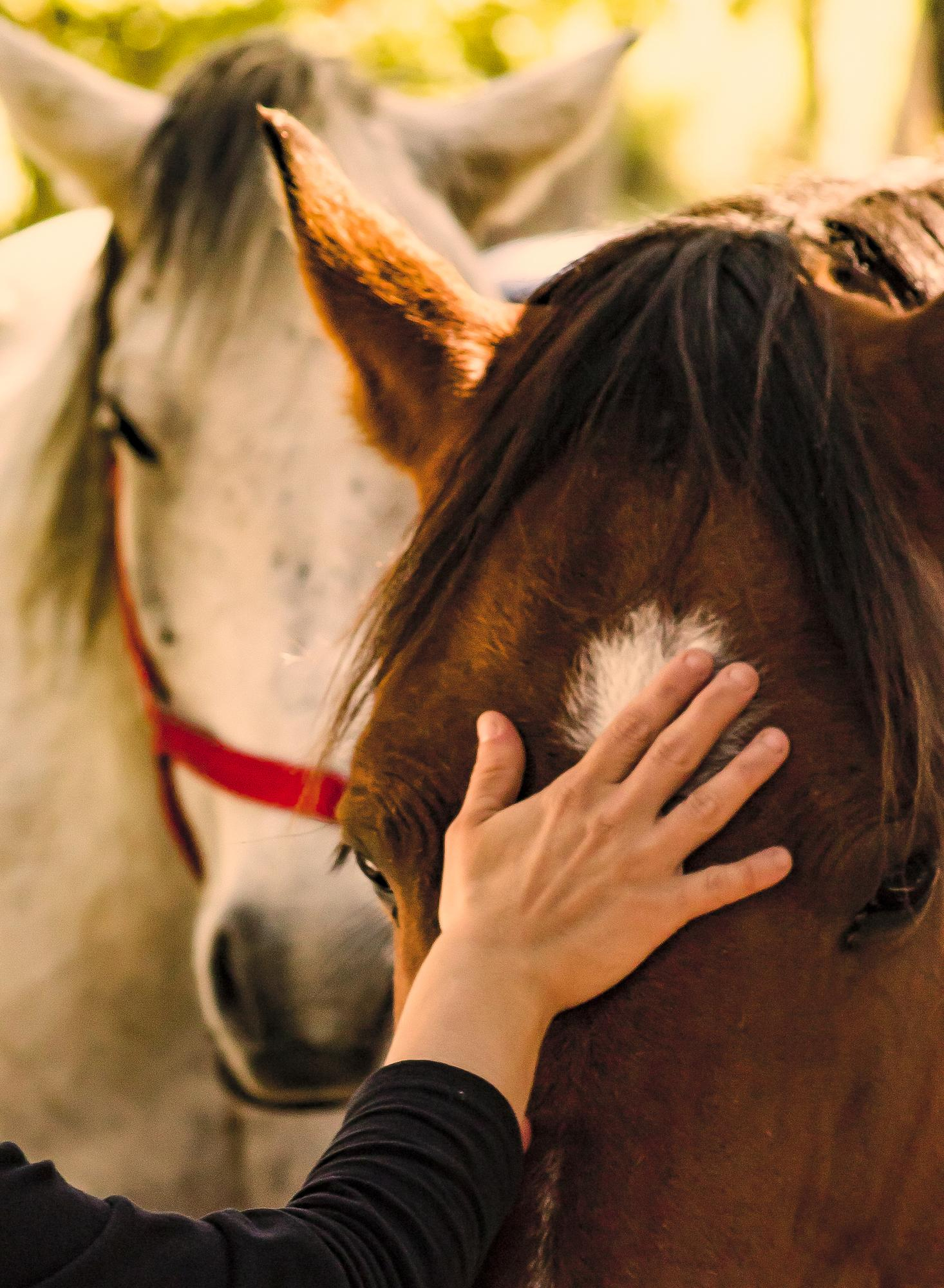
One of the consistent challenges for people in recovery from trauma and addiction is emotional dysregulation, basically the difficulty of staying within a manageable range of emotional intensity instead of swinging between overwhelm and shutdown.
That pattern is a nervous system adaptation to chronic or severe adversity, not a personal failing, and it responds to embodied, relational experiences just as much as it responds to cognitive reframing. Some of this becomes clearer once you understand what happens during equine therapy sessions and how deliberately they're structured.
Horses are particularly well suited for this work, for a few reasons. They're large and physically present in ways that demand genuine attunement from the person working with them, and they can't be managed with words or social presentation, no talking your way around a horse.
When a patient learns to quiet their own internal state to change how a horse responds to them, they're practicing real emotional regulation in real time, with real feedback and real consequences. That skill transfers.
Patients who work through equine therapy sessions often describe a growing ability to recognize what their emotional state actually is and respond with intention rather than reaction.
If you're noticing some of this in yourself or someone you love and wondering whether it's worth exploring, give our Carmel Hamlet team a call at (888) 227-4641. We can talk through what a program like this might look like for your situation.
How Equine Therapy Fits Into the Treatment Program at Arms Acres
Our equine therapy program is one piece of the broader inpatient rehabilitation program at Arms Acres, not something separate from the clinical work patients are already doing in therapy sessions, group programming, and medical care. It's designed to work alongside and reinforce the other modalities in the treatment plan, including Cognitive Behavioral Therapy (CBT) and Trauma-Informed Care (TIC).
Sessions are facilitated by trained staff working with a clear therapeutic intention, not just for the sake of novelty. Before and after each session, the clinical team helps patients process what came up during the experience, connecting emotional and behavioral observations back to the ongoing arc of treatment.
Without that integration, equine therapy risks becoming an interesting experience that doesn't really translate into lasting clinical progress. That processing piece is what makes it therapeutic rather than simply a nice afternoon with horses.
Who Benefits Most From This Approach
Equine therapy is available to patients in our inpatient program, and it tends to land especially well with certain groups. Patients with post-traumatic stress disorder (PTSD) or complex trauma histories often respond well because the non-verbal, sensory nature of the work can bypass the cognitive defenses that protect against vulnerability in verbal sessions.
For patients who struggle to put their emotional experience into words or who just feel like talk therapy doesn't quite reach what's happening internally, working with a horse opens up a different kind of access.
People with relational trauma, meaning trauma that happened within close relationships, sometimes find it a bit easier to start building trust with an animal before they can fully extend that trust to other people. Horses respond only to what's genuinely happening in the interaction.
They have no agenda, no assumptions about the patient, no complicated social dynamics to navigate, and for patients who've learned through hard experience that trusting people leads to harm, that simple, uncomplicated presence can be a meaningful first step.
What the Research Supports
Clinical literature on equine-assisted approaches in addiction and trauma treatment has grown a lot over the past two decades. Studies have documented benefits in reducing PTSD symptoms, improving emotional regulation, decreasing anxiety and depression, and increasing engagement with broader treatment programs.
The evidence base isn't quite as deep yet as it is for some longer-established modalities, but the consistency of results across different patient populations and clinical settings backs its continued use as a complement to, not a replacement for, standard care.
Our team at Arms Acres uses equine therapy because the clinical evidence supports it, and honestly, because we've seen over decades of working with patients what it can do in combination with the rest of our programming. The program holds its place in treatment on clinical grounds, plain and simple.
If equine therapy sounds like something that could help you or someone you love, don't wait to reach out. Arms Acres is located at 75 Seminary Hill Road, Carmel, NY 10512, and our team is available 24 hours a day at (888) 227-4641 or info@armsacres.com. You can also contact us directly through our website, and we'll walk you through the next steps together.
Related Topics: