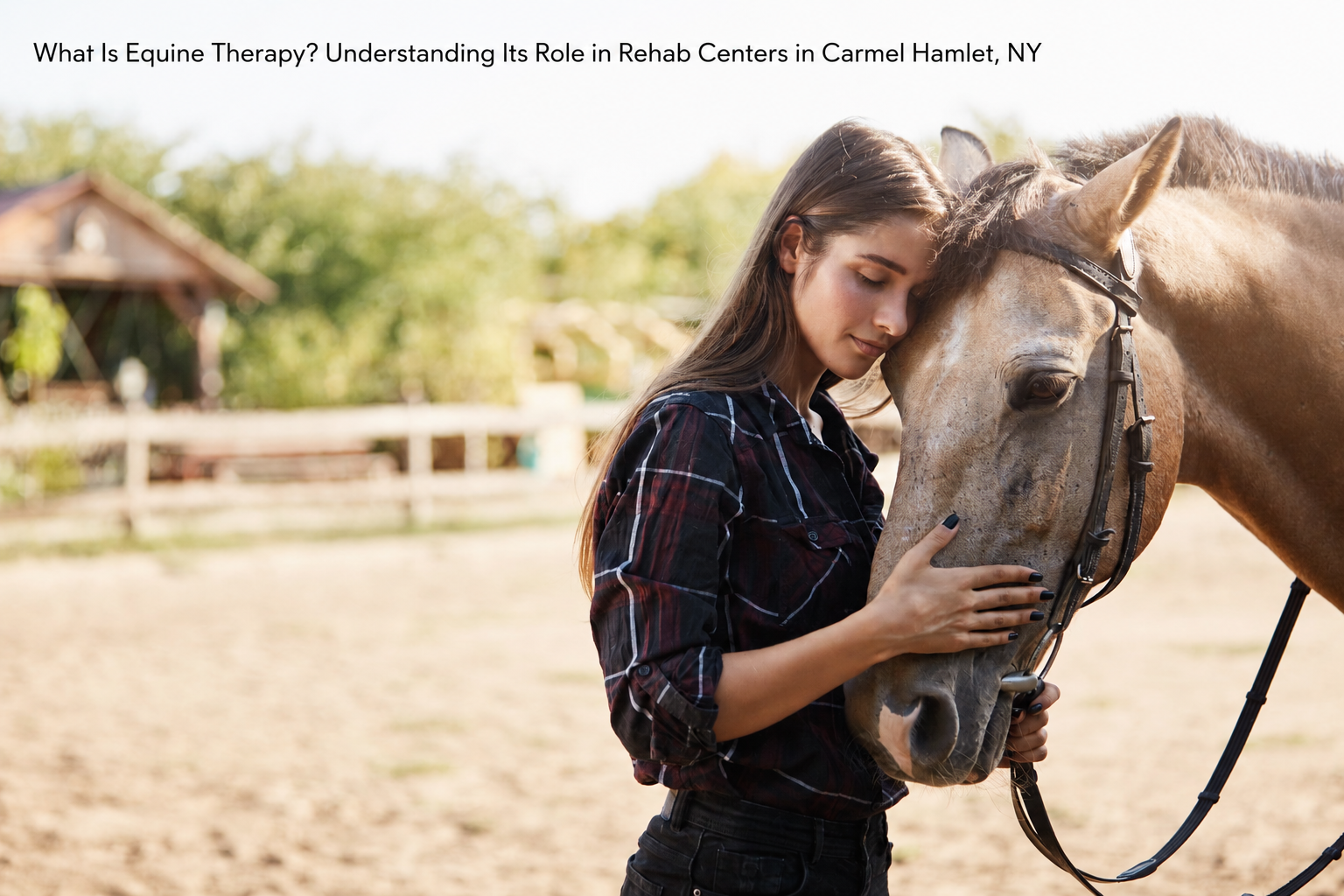
Equine therapy gives clients a different way to engage in treatment beyond traditional talk therapy. In an inpatient program, it may involve guided horseback activities that help people build trust, patience, emotional awareness, and communication skills. It is not meant to replace clinical approaches like CBT or Motivational Interviewing, but it can support the work happening in those sessions.
At a reputable drug rehabilitation center in Carmel Hamlet, NY, equine therapy may be one part of a broader treatment plan. Some clients find it easier to notice emotions, practice boundaries, or stay present through hands-on work rather than conversation alone. For people who feel stuck in talk-based therapy, this kind of experience can make treatment feel more personal and meaningful.
What Equine Therapy Is
Equine therapy, sometimes called equine-assisted therapy or horse-assisted therapy, involves structured interactions with horses facilitated by trained therapists. Activities can include grooming, leading, and working with horses in a supervised setting. Patients do not need any prior experience with horses. The therapeutic value comes from the interaction itself, not from riding skill or familiarity with animals.
Horses are highly sensitive to nonverbal communication and emotional states. Working with them in a clinical setting helps patients develop self-awareness, practice emotional regulation, and build interpersonal skills in a concrete, experiential way.
Why It Works in Addiction Treatment
Substance use disorder, the clinical term for addiction, is often connected to emotional dysregulation, difficulty trusting others, and unresolved trauma. Talk-based therapies address these areas directly. Equine therapy adds a physical, experiential dimension that can help patients access emotions and practice new behavioral patterns in real time rather than describing them in a session.
Research supports equine therapy as a complement to evidence-based treatment. It does not replace individual therapy, group sessions, or clinical programming, but it fills a different therapeutic space within the overall treatment plan.
What a Session Looks Like at Arms Acres
Our equine therapy program is available on our 54-acre inpatient campus in Carmel Hamlet, NY. Sessions are facilitated by experienced therapists and structured around specific therapeutic goals tied to each patient's individual treatment plan.
The outdoor setting on our campus is itself part of the experience. Many patients who have spent extended time in urban environments or under chronic stress find the physical setting of the campus supports the therapeutic process in ways that are difficult to replicate indoors.
Who Benefits Most From Equine Therapy
Equine therapy tends to be most useful for patients who find verbal engagement in group or individual therapy difficult. This includes patients with trauma histories, patients who struggle to express emotions in words, and patients who have had limited success with purely talk-based formats in prior treatment attempts.
It is part of our broader approach to treating the whole person. Our adult residential rehabilitation program includes equine therapy alongside fitness and recreation, art therapy, recovery coaching, and clinical group sessions, because recovery involves more than clinical symptom management alone.
How It Fits Into the Treatment Plan
Equine therapy is one component of a larger, individualized plan. At Arms Acres, treatment plans are built from a full clinical assessment on arrival. The clinical team, which includes physicians, psychiatrists, nurses, licensed social workers, and certified counselors, determines which combination of therapies fits each patient's clinical picture.
For some patients, equine therapy is a central element. For others, it may play a smaller role. The decision is made based on clinical judgment and the patient's therapeutic goals, not scheduling convenience.
Frequently Asked Questions
If you are considering treatment at our facility and have questions about equine therapy or how it fits into the broader program, the following answers address the most common ones.
Q: Is equine therapy safe for people who have never been around horses? A: Yes. Our equine therapy program does not require any prior experience with horses. Every session is facilitated by trained therapists in a supervised setting. Safety and patient comfort are built into how each session is structured.
Q: Does insurance cover equine therapy at Arms Acres? A: Equine therapy is part of the inpatient program rather than a separately billed service. Coverage for inpatient treatment varies by plan. We accept Medicaid, Medicare, and most major commercial insurance plans.
Q: Is equine therapy available for all inpatient patients? A: Equine therapy is available to patients in our inpatient program at the Carmel Hamlet campus. Whether it is included in a specific patient's plan depends on the clinical assessment and the individualized treatment plan developed on arrival.
Q: What is equine therapy meant to accomplish in addiction treatment? A: The goal is to support emotional regulation, self-awareness, and interpersonal skill-building through an experiential format. These skills directly reinforce the work being done in clinical therapy sessions and are relevant to long-term recovery.
Q: How do I get started with inpatient treatment at Arms Acres? A: Start by visiting our admissions page or calling our intake line, available 24 hours a day, 7 days a week. Our team will verify your insurance, answer your questions, and walk you through the next steps.
Contact Us
If you or a loved one is seeking compassionate and professional substance use disorder treatment, Arms Acres is here to help. We are available by phone, email, web, and several social networks! Get in touch with us! We would love to hear from you!
Address: 75 Seminary Hill Road, Carmel, NY 10512
Intake: (888) 227-4641
Business Hours: Sunday - Monday: 24 hours
Email: info@armsacres.com
Please fill out this form, and we will get in touch with you shortly.
Related Topics: